
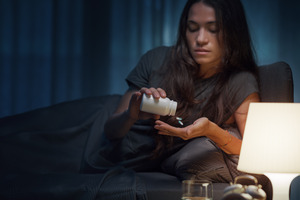
One of the most noticeable effects of sleep apnea is that it can leave you feeling excessively drowsy during the day. As such, the idea of taking sleeping pills to try to improve the quality of your nightly slumber can be very tempting. But unfortunately, this isn’t the solution you might think it is. Here’s a closer look at why taking sleeping pills while you have sleep apnea is a bad idea.
Understanding Sleep Apnea
Sleep apnea is a common sleep disorder that causes breathing to repeatedly stop and restart. Each pause in breathing can force the body to wake up due to low blood oxygen levels. The frequent interruptions in your sleep cycle can prevent you from getting quality rest, which in turn can lead to serious health problems.
If you have obstructive sleep apnea (the most common form of sleep apnea), the pauses in your breathing are often the result of the muscles in the back of your throat becoming too relaxed while you’re asleep. If these muscles collapse, they can narrow your airway and disrupt the flow of oxygen.
Why are Sleeping Pills and Sleep Apnea a Bad Combination?
Sleeping pills help your body and mind relax so that you can fall asleep more easily. Unfortunately, this means that they can further relax the tissues in your throat that are responsible for causing airway obstructions. In other words, sleeping pills can end up making your sleep apnea more severe, leading to even more frequent breathing interruptions throughout the night.
So, How Should You Treat Sleep Apnea?
Instead of trying to fight sleep apnea with sleeping pills, you should seek professional treatment. The traditional way to address sleep-disordered breathing is to use a CPAP machine. This is a device that delivers a constant stream of air through a mask, which helps keep the airway open while you’re asleep. But while CPAP machines are effective, many people don’t like using them due to their being noisy and uncomfortable.
Fortunately, patients with mild to moderate cases of sleep apnea may be able to pursue an alternative to CPAP: a customized oral appliance. When you wear an oral appliance at night, it will slightly shift the position of your lower jaw in order to keep the airway open, thereby reducing the risk of obstructions occurring.
It’s important to get sleep apnea under control as quickly as possible so that you can get the rest you deserve. But instead of trying to treat the issue on your own with sleeping pills, it’s better to talk to a professional to see what they recommend.
About the Author
Dr. Dennis C. Ayer graduated from the University of Missouri-Kansas City School of Dentistry in 1984. Over the course of his career, he has completed more than 3,500 hours of continuing education. He is certified to offer SomnoMed oral appliances as a solution for sleep apnea. If sleep-disordered breathing has left you feeling exhausted during the day, you can schedule an appointment with Dr. Ayer at his practice in Leawood by visiting his website, using his online scheduling tool, or calling (913) 246-3000.